

Sexual Assault & Relationship Violence

sexual assault violence banner

Sexual Assault and Relationship violence includes:

  • Unwanted sexual touching by anyone (partner, friend, or stranger)

  • Sexualized violence (vaginal, oral, or anal)

  • Physical violence such as hitting, kicking, biting, or shoving

  • Waking up and not knowing what happened


Domestic Violence Patients 


We also care for patients who have experienced domestic or intimate partner violence. 


If you choose, we can document injuries and the details of what happened. This documentation is confidential and you do not have to report to the police if you do not feel safe or ready to do so. The medical record will remain on file indefinitely, so it can be accessed later if you ever need or want it. 


We are able to see domestic violence patients beyond 7 days after the incident if there are injuries that can still be documented. Please ask to see a Forensic Nurse Examiner. 


What Happens at the Hospital

Your health and safety are our top priority. Everything that happens is your choice, and you may say no to any part of care at any time. 
A Forensic Nurse Examiner may offer: 

  • A head-to-toe medical exam with documentation 
  • Emergency Contraception (Plan B) if pregnancy is a concern
  • Medications to help prevent Chlamydia and Gonorrhea  
  • Hepatitis B or tetanus immunizations, if needed 
  • Medications to help prevent HIV 
  • Collect forensic samples if you are wanting that done 
  • Other treatments or medications as needed

Depending on your medical needs, you may also be seen by a physician. 


Reporting Sexual Assault or Relationship Violence to Police

Your care at the hospital is confidential. Police or parents will only be contacted with your consent.

What does reporting to police mean?

Reporting to police does not automatically mean charges will be laid or that you will go to court. These may happen, but not in every case.

If you choose to report, police will begin an investigation. This may include:

  • Asking you questions about what happened

  • Collecting evidence from the scene or hospital

  • Speaking with witnesses or others who may have information

If you choose, a Forensic Nurse Examiner can collect forensic samples as part of your care.
 

When do I need to report?

There is no time limit to report to police. If you decide to report, it is generally helpful to do so as soon as you feel ready.
 

What if I don't feel safe?

Police and support workers can help with safety planning and may offer options to help protect you and your family.

More information: Sexual assault, intentional violence and the law.
 

Learn more by watching these videos: 

News & Events

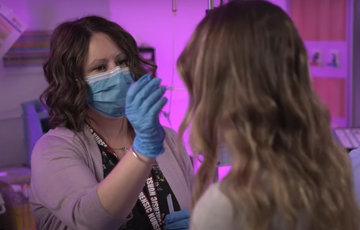
Aimee Falkenberg, FNE, conducts a forensic exam

New simulation training helps forensic nurses provide the best care possible

Forensic nurses will benefit from a new simulation training program developed by Island Health. 

Read more

Standing against gender-based violence

Standing against gender-based violence

On National Day of Remembrance and Action on Violence against Women we remember those lives lost, and those among us now who continue to face violence, harassment and discrimination because of their gender identity and expression.
Read more

Supporting New Forensic Nurse Examiners in Remote Communities

Supporting New Forensic Nurse Examiners in Remote Communities

People living in remote North Island communities now have access to Forensic Nurse Examiner (FNE) services thanks to innovative thinking and the creative use of existing virtual care technology by Island Health’s Virtual Care and Forensic Nurse Examiner teams.  

Read more