

Immunizations for school aged children and youth

At Island Health, providing immunizations is one way we support the health and well-being of children in our communities. Routine immunizations are offered for school-aged children to help protect them from serious illnesses and keep schools and families safe.

Immunizations are available at school-based clinics for Kindergarten, Grades 6 and 9, as well as at local public health units. 

Families will receive clear information about which vaccines are offered and how to provide consent or share decisions about vaccination.

These immunizations are free, and our team is here to answer questions, provide guidance, and make the experience as safe, welcoming, and supportive as possible for you and your child.

BC’s Vaccination Status Reporting Regulation (VSRR)

The Vaccination Status Reporting Regulation (VSRR) requires all students in British 

Columbia to have complete immunization records in the Provincial Immunization Registry. This applies to all students in BC from kindergarten to Grade 12, including those who are home-schooled, attend independent schools, or are international students. (This requirement does not apply to students attending First Nations schools.)

If someone at a school has a vaccine-preventable disease, students who are not protected (not immunized or with a documented history of having had the infection) may be asked to stay home until it is safe to return. This helps protect unimmunized students, those who cannot be immunized for medical reasons, as well as the broader school community.

Why it’s important that public health has my child’s complete immunization record

Ensuring public health has your child’s complete immunization record, including any immunization refusals or deferrals, helps keep your family, your school, and your community safe.

If someone at a school has a vaccine-preventable disease, students who are not protected (not immunized or with a documented history of having had the infection) may be asked to stay home until it is safe to return. This helps protect unimmunized students, those who cannot be immunized for medical reasons, as well as the broader school community.

 Accurate records give you peace of mind and allow public health to respond quickly and effectively during an outbreak.

Are my child’s immunization records up to date?

Immunization records are kept safely in one place called the Provincial Immunization Registry.

If your child received immunizations at a public health unit, school-based clinic, pharmacy, or community health centre in BC, their records should already be in the Provincial Immunization Registry. However, immunizations given at a doctor or nurse practitioner’s office, at a travel clinic, or anywhere outside the province may not be in the registry.

If you previously requested that a vaccine refusal be recorded, this should also appear in your child’s provincial record. Refusals for vaccines are automatically reviewed at ages 2, 4, 10, and 13 so your child can be offered vaccines again, and flu vaccines are offered every year.

You can check your child’s immunization record online through BC’s Health Gateway. (note that vaccine refusals are not viewable in Health Gateway).

My child is missing immunizations or has incomplete records (kindergarten to grade 12)

If your child has not previously been immunized or has had immunizations at a doctor or nurse practitioner’s office, travel clinic, or outside BC (including international students), their record may not be complete. Please submit a copy of their previous immunization records using the Provincial Immunization Portal. If you need help or have questions about updating your immunization records, you can talk to a phone agent (translators are available): 

  • 1-833-838-2323 Monday to Friday 7 a.m. to 7 p.m. within Canada or the USA 
  • 1-604-681-4261 (International)
  • 711 (Telephone Device for the Deaf)
  • Video Relay Services (VRS) sign language interpretation is free for people who are deaf, hard of hearing or speech impaired
  • If your records are in a language other than English or French, your public health unit can help guide you on next steps.

A few weeks after you submit your child’s immunization records through the Provincial Immunization Portal, you should contact your local public health unit to make sure their record is up to date. We’re here to support you and answer any questions you may have.

Where can I get my child immunized?

Island Health offers school-based immunization clinics for children in kindergarten, Grades 6 and 9, according to the BC Immunization Schedule. Parents/guardians and students will receive information from Island Health about the vaccines offered, along with instructions to provide consent or refusal. These immunizations are free and are offered at school by a public health nurse or at your local public health unit.

School-aged children, including those who are home-schooled, can also receive immunizations at their local public health unit.

Other locations where families may receive immunizations in some communities are:

  • Pharmacies
  • Community health centres 
  • Nursing Stations 
  • Primary Care Provider clinics  

Call Public Health to learn more or speak with your health care provider to find out if they provide these services.

Does my child need immunizations to attend school?

No. In British Columbia, children are not required to be immunized to attend school.

However, all students in BC must have a complete immunization record in the Provincial Immunization Registry. This record includes information about all vaccines your child has received, as well as any immunizations that have been deferred or refused.

In the event of an exposure to a vaccine-preventable disease at school, public health may need to identify which students are not immunized. Unimmunized students may be asked to stay home temporarily to protect themselves and others.

What if I don’t plan to immunize my child?

If you choose not to immunize your child for some or all vaccines, it is important to have this decision documented with public health. Keeping your child’s immunization records up to date with this information is required under the Vaccination Status Reporting Regulation to help protect your child, your family, and the school community from serious illness. Accurate records help public health respond quickly in the event of a vaccine preventable disease outbreak.

Refusals for vaccines are automatically reviewed at ages 2, 4, 10, and 13 so your child can be offered vaccines again, and flu vaccines are offered every year.  You may receive communication from public health at these ages, or when Kindergarten, Grades 6 and 9 school-based immunizations are offered.

To ensure your choice is recorded, please contact your local public health unit to speak to a public health nurse.

Helpful Resources:

The benefits of vaccination

Vaccines have saved more lives in Canada over the past 50 years than any other medical intervention. They prevent illnesses like infections and cancer, that can cause pain, lifelong disability, and death.

When more people in a community are immunized, it becomes much harder for diseases to spread—helping protect babies, older adults, and people who cannot be vaccinated for medical reasons.

Vaccines are safe and provide the best protection against serious illnesses such as measles and mumps, which can spread quickly in schools and communities.

Kindergarten immunizations

When your child turns four, it’s time to book an appointment with public health for their next set of routine vaccines. These immunizations help keep your child healthy and ready for kindergarten by protecting against serious diseases.

To give your child the best protection possible, it’s recommended to complete these vaccines soon after their 4th birthday. Public health will send reminders between ages 4 and 6.  If your child still needs vaccines during their kindergarten year, school clinics may be available to help make access easier for families.

The following vaccines are free for children starting at age four: 

  • Tdap-IPV: protects against diphtheria, tetanus, pertussis (whooping cough), and polio 
  • MMRV: protects against measles, mumps, rubella, and varicella (chickenpox) 

In addition to their scheduled vaccines, your child will be offered any other routine immunizations they are eligible for, except for influenza and COVID-19 vaccines. 

Immunizations for students in grades 6 to 12

Public health nurses visit schools to provide routine immunizations for students in Grades 6 and 9. Students in other grades may also be offered an opportunity to receive missed or overdue immunizations. Parents/guardians are encouraged to discuss immunization consent with their children.

For more information, please review the following HealthLinkBC resources:

Under BC’s Infant’s Act, children under 19 may consent to health care, including immunizations, if they can understand the benefits and risks (mature minor consent). 

Parental consent is obtained for Grade 6 students. For students in Grades 9–12, mature minor consent may be offered when appropriate. 

In addition to their scheduled vaccines, your child will be offered any other routine immunizations they are eligible for, except for influenza and COVID-19 vaccines.

What immunizations does my child need if we are new to Canada or BC?

Immunization schedules can differ between countries and provinces. In British Columbia, most vaccines recommended for children are provided free of charge through Public Health. 

If you’re new to B.C., including international students, please submit your child’s immunization record to the Provincial Immunization Registry so it can be added to their health record. 

To learn which vaccines your child may need, contact a public health nurse at your local public health unit.

What immunizations does my child need if they have a chronic health condition? 

Certain chronic health conditions can increase the risk of vaccine-preventable diseases. Talk with your doctor, nurse practitioner, or your local public health unit to determine which immunizations are recommended.

What if my child is sick when immunizations are planned?

Mild illnesses, such as colds, are not a reason to delay immunization. For more serious illnesses, check with your health care provider before the appointment, or call your local health unit.

Helping my child have a positive immunization experience

Many children feel nervous or fearful about immunizations. You can help by: 

  • Talking openly about what to expect in simple, calm language.
  • Staying calm and supportive during the visit.
  • Bringing comfort items like a favorite toy or book.
  • Using distraction techniques such as stories, games, or videos.

Praising your child afterwards for being brave.

Non-publicly funded vaccines

If you’re interested in vaccines not included in B.C.’s routine schedule—such as travel or additional protection vaccines—you may be referred to your health care provider, pharmacist, or a travel clinic.

Helpful resources

A Better Immunization Experience for your Child
Have a Positive Experience: Tips for School Aged Children & Teens
Improving the Vaccination Experience: What parents and caregivers can say
BCCDC CARD SystemThe CARD System (Comfort, Ask, Relax, Distract) provides groups of strategies that can be used before and during vaccination to make the experience a more positive one for students.
Handle Your Shots Like a Champa self-paced series of lessons that explains to children why they get vaccines in school and ways to be less anxious on vaccination day using CARD 

Videos

News & Events

green ribbon representing HPV awareness

“Dad, I have cancer”: A father’s plea to protect youth from HPV

March 4 is International HPV Awareness Day. The Victoria father is turning his grief into action, urging parents and caregivers to get their children vaccinated against HPV.

Read more

group of children lying in a circle

Whooping cough resurgence prompts vaccination reminder

With the resurgence of a vaccine-preventable disease in Canada, Island Health Public Health is encouraging everyone to ensure they’re up to date with their vaccinations.
Read more

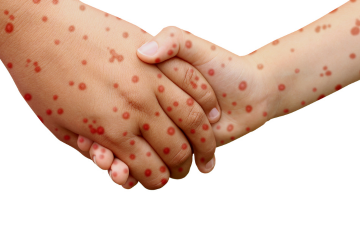
measles on hands

Improving measles immunization rates to prevent outbreaks

With measles circulating internationally, Island Health is encouraging everyone to ensure their routine immunizations are up to date to lift collective immunization rates this National Immunization Awareness Week (April 22 to 30).

Read more