
What began 15 years ago to give nursing students a head start has grown into one of Island Health’s most successful workforce initiatives. With 284 employed student nurses and psychiatric nurses on staff last summer — the second-highest total of any health authority in B.C. — the Employed Student Nurse (ESN) and Employed Student Psychiatric Nurse (ESPN) program is helping students turn classroom knowledge into career confidence, while fueling a stronger, more resilient nursing workforce.
The program offers nursing and psychiatric nursing students 275 hours of paid, hands-on experience in healthcare facilities, bridging the gap between academic learning and the realities of being on the job in a supportive environment. For Sara Shelestynski, participating in Island Health’s ESN program in 2024 solidified her pivot in career, and introduced her to a community she now calls home. Having grown up in Campbell River, Shelestynski began nursing school with an interest in rural nursing after working as a cardiac technologist in larger cities.
“I wanted the opportunity to see what rural nursing was all about while I was still a student, which I might not have had the courage to do as a new grad,” Shelestynski said. Her time in the program took her to the Port Hardy Hospital. While she was the only ESN onsite, Shelestynski said she felt very supported by the team and welcomed by the community—so much so that upon finishing her fourth year in nursing school, she returned to Port Hardy Hospital and accepted a full-time position with Island Health.
Having ESNs or ESPNs return to Island Health to pursue registered nurse (RN), and registered psychiatric nurse (RPN) positions has been a major win for the organization in the past few years. More than 84 per cent of ESNs in 2019-2022 transitioned to work as RNs in Island Health. It’s also common that the location they try out as an ESN or ESPN becomes their chosen place of work, whether it was home previously or becomes a new home—87 per cent of nursing school graduates who come back to work at Island Health do so in the location where they were initially hired as ESNs.
That’s likely to be the journey for nursing student Carys McDevitt, who joined Cowichan District Hospital (CDH) as an ESN in July 2025. For McDevitt, who is studying nursing in Prince George, the ESN program was a chance to come home to Duncan for the summer, while being able to maintain skills and knowledge she learned over the school year.
“It’s also been very nice to have a mentor in the program, and to get compensated well is a huge bonus,” McDevitt said. “Even after I’d been working for only a few weeks, the variety of skills I was able to practice was amazing to me.”
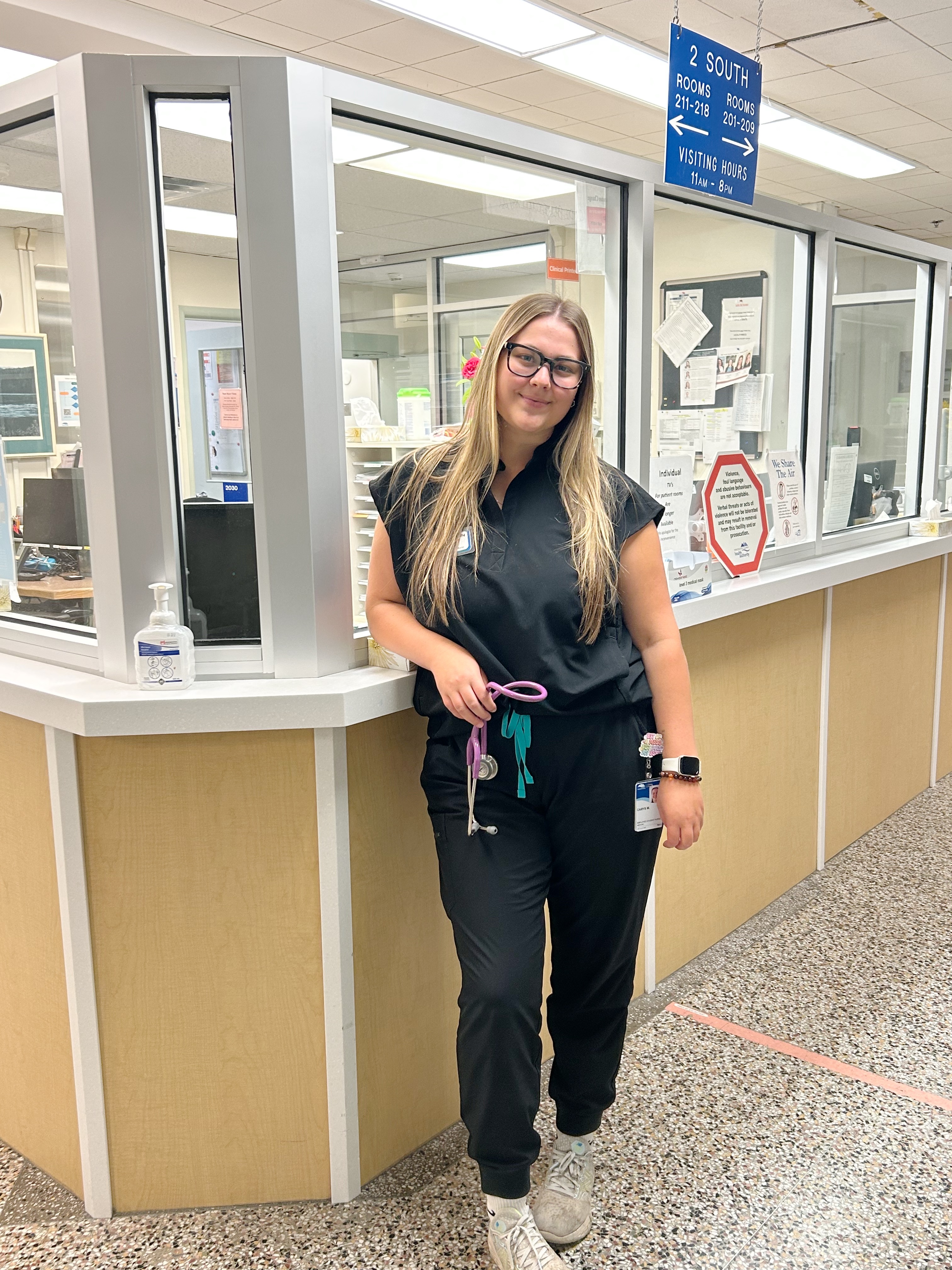
After a positive first taste as an ESN, McDevitt returned to CDH to pick up shifts during her fall reading break and holiday break in December to practice new skills she’s learned at school. This highlights other benefits for the students going through the ESN and ESPN program: flexibility from healthcare sites and gaining seniority as Island Health employees.
“Your start date as an ESN counts as your start date as an employee,” said Kelsey Biehler, who worked as an ESN at Nanaimo Regional General Hospital (NRGH) before joining the organization full time after graduating nursing school in 2022.
“The ESN program was like having an extra preceptorship – you’re going to become a better, safer nurse if you have more experience working under an experienced nurse. There was also a lot of flexibility around our schedules, and we could continue to work weekends during the semester if we wanted,” Biehler said.
Offering that flexibility to ESNs is something that’s also important to Nina Padjen, a manager at CDH overseeing the ESNs at her site, which included McDevitt and seven other ESNs this past summer.
“I allow them to self-schedule their shifts, but I also make them aware that as the manager, I am responsible to keep my units running 24/7 and we look to them as part of our team – so when they book a shift, we expect them to follow through with that commitment,” Padjen said. “We must be doing something right, because staff keep coming back after being ESNs.”
Padjen also spoke highly of the positive impact of having ESNs on the team. “I don’t think ESNs realize how valuable they are to the team. They want to be involved and help their learning, but they’re also assisting the existing team by assisting with some of the workload. It’s been a rewarding experience for everyone.”
Since the program’s inception in 2010, it has grown in volume of nurses and psychiatric nurses as well as a wider range of clinical sites, with placements available in acute care, mental health, long-term care and rural settings.
“By embedding students in supportive clinical environments early, the ESN and ESPN program helps build a culture of quality, safety, and continuous learning that benefits patients, teams, and future nurses alike,” said Krista Allan, Island Health Vice President of Quality, Research, and Chief Nursing and Allied Health Officer.
“We have people applying weekly to the program,” said Andrea Taylor, manager of professional practice and learning with Island Health. As part of the team that manages and oversees the ESN and ESPN program, she has witnessed the program evolve since its beginnings, largely in response to student and educator feedback.
Looking ahead to future enhancements, Taylor said the organization is interested in expanding student employment opportunities beyond nursing to areas like physiotherapy, occupational therapy, social work, as well as Indigenous and community health roles.
Being receptive to feedback about the ESN program was something that stood out to nurse Camryn Stanley about Island Health.
“Being on the north end of the island working in Port McNeill and Port Hardy, I was the second student nurse to go through the new grad transition in that location and I tried to help provide feedback along the way. There was a lot to learn when it comes to living in a small, remote community like resources available in the community, challenges of travel and transport in and out of the community, as well as what staffing looks like and the needs of the community,” recalled Stanley. “When I came back the second year as an ESN, I immediately noticed they had done a lot to revise the resources and training in the new grad transition program to tailor them to the context in northern Vancouver Island. It really made me want to come back here to work.”
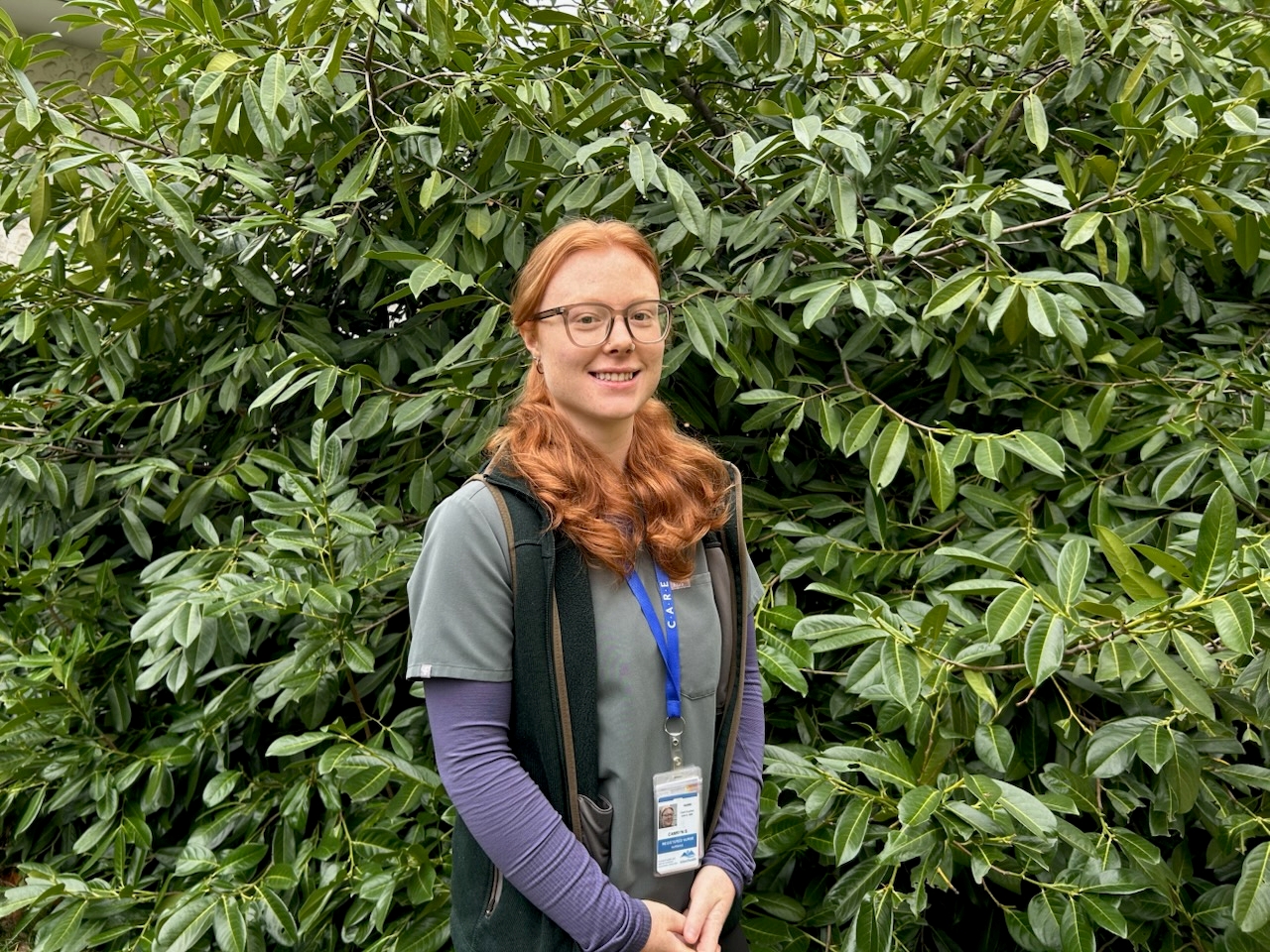
Interested in launching your nursing career with Island Health? Employed Student Nurse (ESN) and Employed Student Psychiatric Nurse (ESPN) positions are posted in the spring and fall. Learn more about these opportunities and program eligibility on our careers website.
For questions about the program, reach out to EmployedStudentProgram@IslandHealth.ca.