
Island Health's Souper Meals in Victoria and Peppermill in the Comox Valley are serving up more than frozen meals. They're teaching culinary skills to people with mental health and substance use challenges while providing meals to others facing similar circumstances.
"These programs recognize that recovery goes beyond traditional treatment," said Lauren Fox, program coordinator for Souper Meals. "We're addressing employment, food security and social connection as part of people's healing journey."
Souper Meals operates as a psychosocial rehabilitation kitchen experience. After completing food safety training, clients attend weekly half-day shifts to learn kitchen skills while producing frozen meals sold at low cost to current mental health and substance use clients across Greater Victoria.
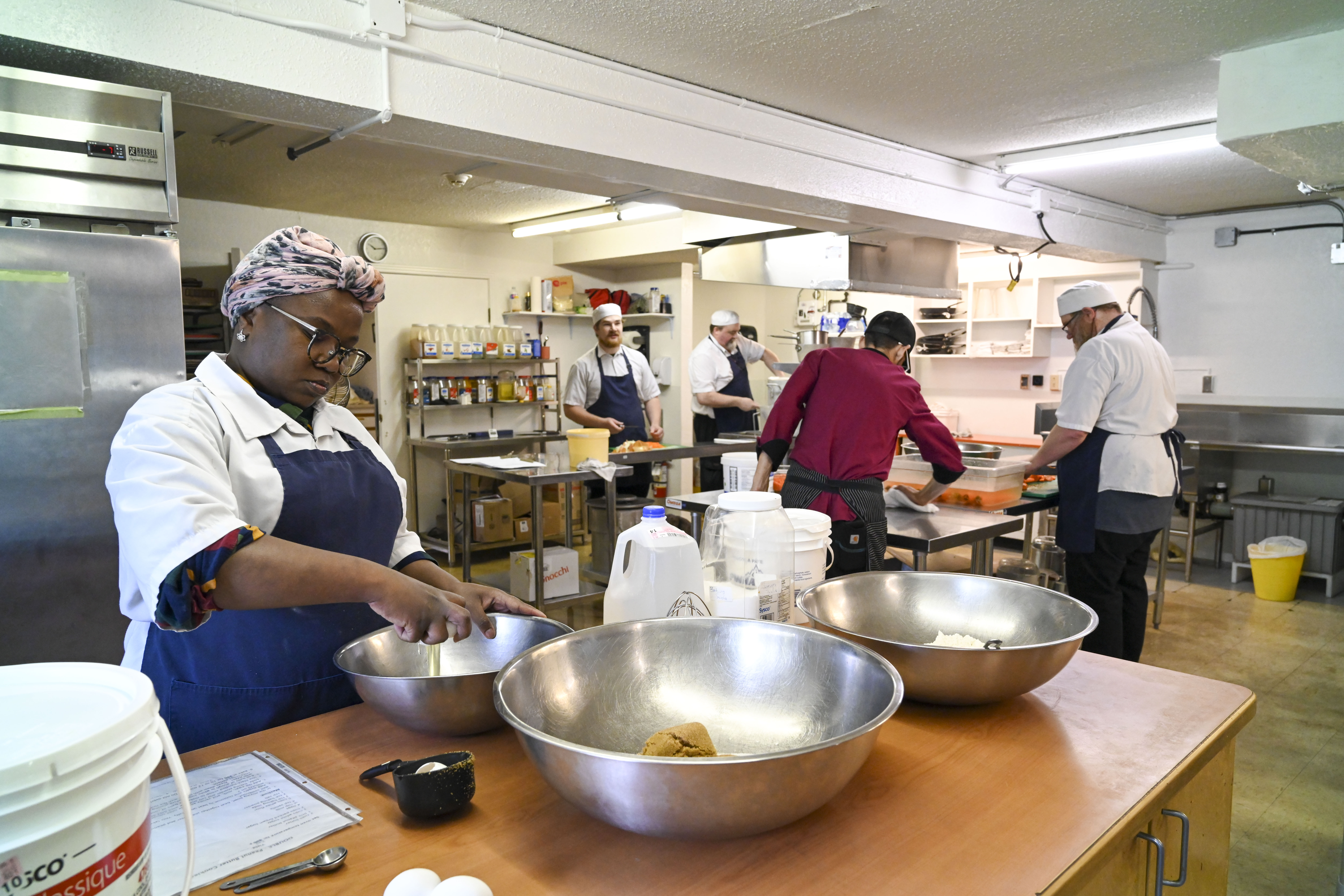
Fox said one of the core principles of recovery-oriented practice is having a lens of hope. "The idea is that people are able to live a life of meaning and purpose despite the challenges they might be experiencing from their mental health or substance use concerns," she said.
"Engaging in an activity like this really gives people a chance to develop and showcase strengths they have in their life and an opportunity to feel that they're learning, moving forward and capable."
Recent equipment upgrades provided by grants from the Sovereign Order of Saint John, facilitated by the Victoria Hospitals Foundation, have expanded the program's capacity. The additions are helping Souper Meals to move beyond frozen meals and begin offering fresh food delivery.
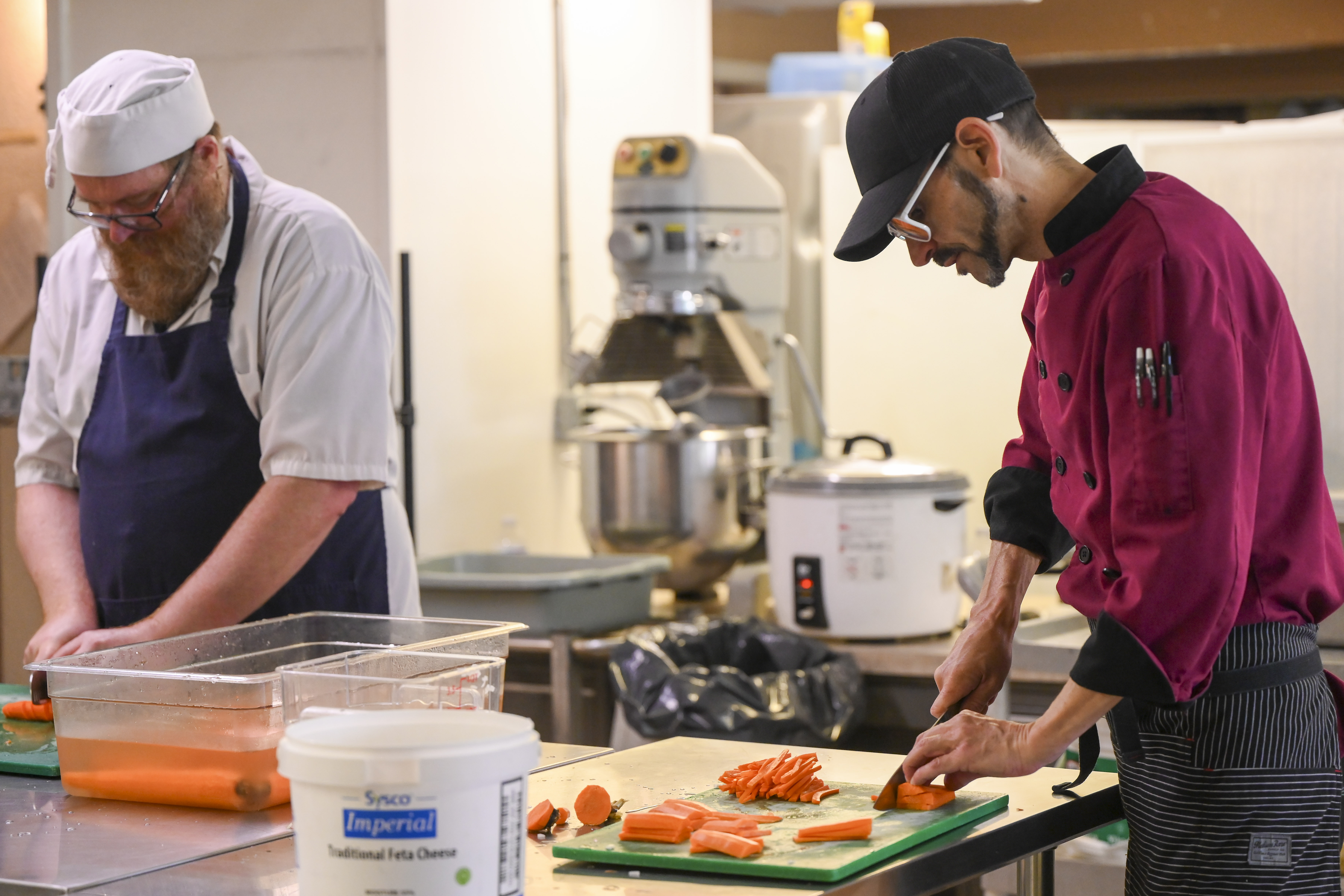
Simon, a Souper Meals client, learned about the program through his Island Health care team.
"The staff have been very supportive of my contributions and helpful in correcting my mistakes," said Simon. "Now I feel motivated to work more. The gained experience has led me to feel more confident about getting out and working."
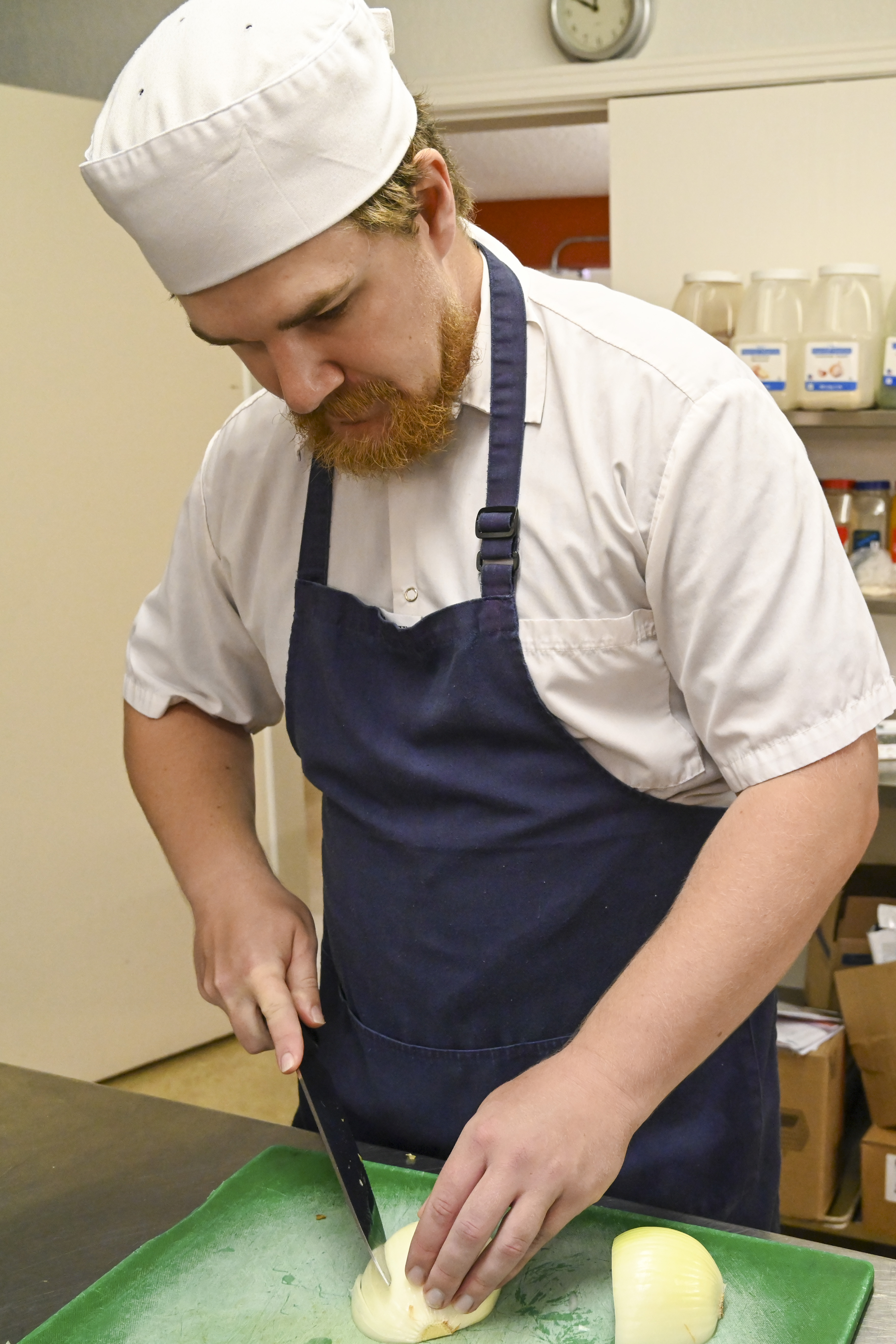
In the Comox Valley, Peppermill is a frozen meal and pre-vocational kitchen training program.
"It's way easier to connect and be vulnerable when you're in action and working alongside somebody," said Renate Stiefvater, the program's rehabilitation worker. "It creates a really safe environment for everybody to open up."
Occupational therapist Kristen Gilbert, who has worked with Peppermill for a decade, said the program is unique in its impact. "This is really one of the only ways we're actively rehabilitating people and helping to improve their lives," she said. "We get people in our care for at least a year and really create a lot of positive change for them."
The Peppermill program tracks progress through regular evaluations and goal-setting sessions. About 80 percent of participants complete all their hours. Many transition into supportive employment positions where they receive continued coaching, while others secure jobs directly without additional support. Some graduates return as paid kitchen helpers or mentors, continuing to develop their skills while supporting new participants.
Duane Billy has completed Peppermill three times over the past decade. What originated as a desire to give back to his community transformed into a career path.
"When I first started out, I gained some entry-level skills here at Peppermill," said Billy. "I got so interested in working in kitchens that I took a prep cook course and graduated with an A-minus based on the skills I learned here."
Billy now works as a kitchen helper and mentor while pursuing his apprenticeship and level one certification.
"This program provides me with a sense of belonging through communication by learning as part of a team," said Billy. "The relationships I've made with my classmates and instructors have led to mentorship and job opportunities."
Chef instructor Catherine Mailhiot, who joined Peppermill in March, said participants motivate her. "They're really inspiring considering some of the challenges they've had to face and things they've overcome," she said. "Every week is like a team building experience."
Island Health also supports the Dinner Bell program in Campbell River, a partnership with the Salvation Army. Led by a Red Seal chef, the program provides culinary training to mental health and substance use clients who receive an hourly stipend for their participation. Like Souper Meals and Peppermill, Dinner Bell participants produce low-cost frozen meals while building kitchen skills, confidence and community connections. A similar program, Food Matters, operates in Port Alberni.
These programs accept referrals from mental health and substance use case managers. People interested in joining can speak with their Island Health care team about whether the programs might be a good fit for their recovery goals.