
Island Health has recognized two Victoria teens for their efforts to promote harm reduction awareness and training at Glenlyon Norfolk School in Victoria. The 2026 Youth Harm Reduction Award was recently given to Noah Grand and Isabella Jubb, both Grade 12 students at the school.
“Harm reduction saves lives, and Noah and Isabella’s leadership is a powerful example of how education and compassion can make a difference,” said Josie Osborne, Minister of Health. “By bringing naloxone training into their school, they are helping ensure more people are prepared to respond in an emergency. Their work is breaking down stigma and creating a culture of care and understanding among their peers. This is exactly the kind of community-driven action we need to address the toxic drug crisis.”
In March, Grand and Jubb provided 20 students from Grades 11 and 12 at their school with naloxone training – a vital response to opioid poisonings that can save lives. This involved a presentation on how opioids affect the body, how to identify an opioid drug-poisoning and how to respond. Students practiced giving naloxone and other steps, such as performing CPR and rescue breaths using practice dummies.
“Noah and Isabella’s project is an inspiring example of youth in action,” said Leah Hollins, Board Chair at Island Health. “By sharing their learnings with others, they have shown how we can all make a difference – no matter how daunting the challenge.”
Grand was inspired to pursue the project after writing an essay on the drug-poisoning crisis in B.C. He partnered with Jubb and they undertook their own naloxone training through Toward the Heart. Then, after collaborating with school administration and the school nurse about event planning, materials and consent forms, they designed and provided the presentation for their peers.
“The main thing that we learned was that there are many people in the community who are willing to help and want to make a difference to solve this issue,” said Grand. “We hope that having set this up, other students will pick up where we left off and host more training sessions for future students.”
Having witnessed the impacts of the drug-poisoning crisis in their communities, both Grand and Jubb were motivated to respond. “Seeing the real-life consequences of the crisis inspired me to take action, and educating youth is the first step in reducing stigma surrounding the issue,” said Jubb.
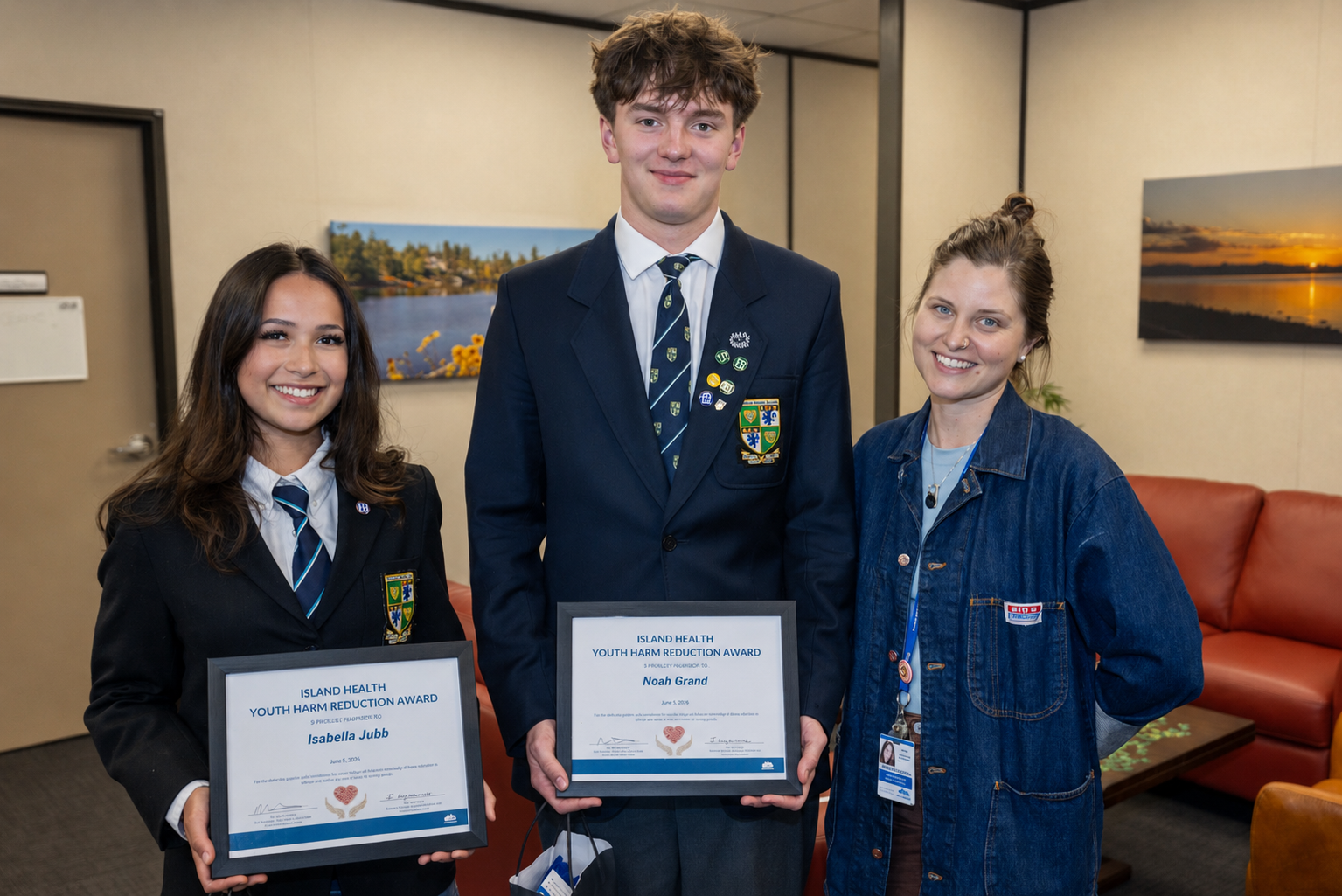
Island Health’s annual Youth Harm Reduction Award is open to people under 19 who live in the Island Health region. Projects focused on public health harm reduction in their communities are eligible. Applications are reviewed typically in April, with the recipient announced in June.
Harm reduction aims to reduce negative health, social and legal impacts associated with a range of activities. Widely accepted practices include the use of seatbelts and bike helmets, condoms, speed limits and sunscreen. Regarding the toxic drug crisis, harm reduction often refers to safer ways to consume substances, safer substance use supplies and the use of naloxone to reduce the effects of drug poisonings from opioids.
Quotes
“Noah and Isabella have noticed a lack of empathy in people around this issue, and this was part of their motivation to learn more and take action. They understand that the key to effectively tackling this problem lies in reducing stigma through education, advocating for a focus on youth who will inherit the problem.”
Rebecca Nielson, Vice-Principal & Coordinator of Student Life and Leadership, Glenlyon Norfolk School
“Noah and Isabella’s project clearly reflected the core principles of harm reduction: meeting people where they are, reducing preventable harm, and recognizing that education and preparedness can save lives. We were particularly impressed by their acknowledgment that addressing the toxic drug crisis requires collective effort. By equipping others with life-saving skills, they expanded the reach of harm reduction well beyond themselves and contributed to a safer, more informed school environment.”
Carlin Dunsmoor-Farley, Manager, Addiction Medicine and Substance Use, Island Health